

Synopsis
By automating the process with a focus on making replicable projects, Fastloop ensures Stack Modular has more predictable costs that enable them to drive greater profitability through increased efficiency.
Highlights
A 6 month process reduced to 10 minutes
Increased project capacity and profit potential
From manual process to operational AI in 5 months
Challenges
The construction industry is the only industry in the last 100 years that has decreased in productivity — primarily due to increased processes in pre-construction phases. For Stack Modular, building is fast. The prefabricated, modular construction projects they build can be manufactured in just three months and the final, on-site build and assembly comes together in a snap; however, before they become a reality, they must go through a pre-manufacturing process that typically takes three years. This includes a six-month sales process and a two-and-half-year design and engineering process.
That initial three-year-process is where we have the opportunity to uncover ways in which AI can streamline processes, improve speed to market, and increase profitability. Within these processes, Fastloop identified three key challenges.

Core challenges include:
Developers often have specific requests that involve customization of the SKUs that Stack Modular has already designed and engineered. A trained AI could analyze the requirements of the developer and suggest the ideal specs to satisfy client needs without unnecessary modifications while ensuring the suggested SKUs are part of a consistent and replicable manufacturing process.
Stack Modular does not have a significant amount of historical data for models to be trained on. Determining the appropriate supplemental data to add to training models — and ensuring future outputs are also included — will continue to enhance model outputs.
Awareness of what AI currently cannot accomplish (for example, that technical drawings cannot be created or interpreted) will help Fastloop not only properly set expectations with Stack Modular, but also contribute to planning a phased approach where solutions that improve the engineering phase can evolve alongside industry-wide improvements to the underlying technology.
Solution
Fastloop took an iterative approach to ensure Stack Modular felt the immediate benefits of AI while setting the foundation for future phases. The primary objective was to tackle the six-month sales process by building a “Configurator” for the sales team that automated the production of full sales proposals. To build this Configurator, a data foundation would be created that sets the stage for future implementation of AI-driven solutions.
Key components of the solution:
- Non-technical members of the sales team input required details from a developer (e.g., number of units, square footage, etc.) into a low-code application built with Super Blocks that integrates with Google Cloud and Big Query.
- The AI then suggests the most appropriate SKUs to meet build requirements from the 1000s of up-to-code SKUs that already exist in Stack Modular’s library. This automated analysis is designed to keep the need for customization low.
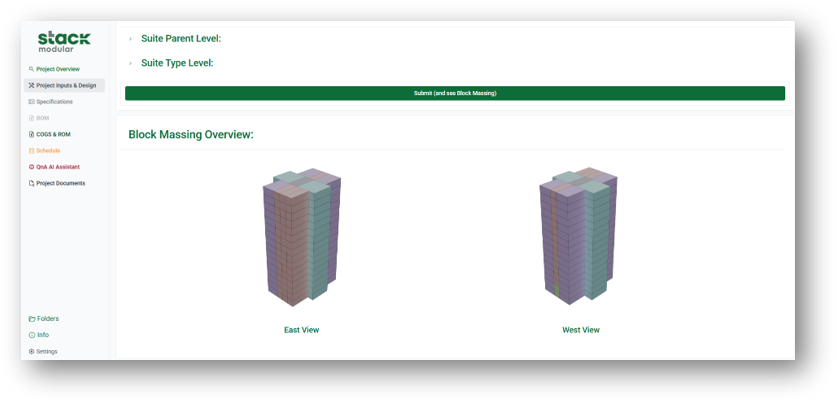
- Based on the recommended SKUs, it aggregates all the building specs from ducting, to plumbing, to electrical and more to generate a block-D massing that shows the size and shape of the proposed build.
- These specs along with pricing, schedules, and more are then packaged into a full 30 page sales proposal that is fully editable in Google Docs. Generative AI produces a written intro that discusses the business, project goals, values, and more. This report used to be the final result of six months of work and is now produced in ten minutes.
- Additionally, a conversational AI agent is available that employees can prompt to ask questions about past projects. Questions that would be incredibly time-consuming and technical to answer like “how much ductwork is in this building?” can be answered immediately.
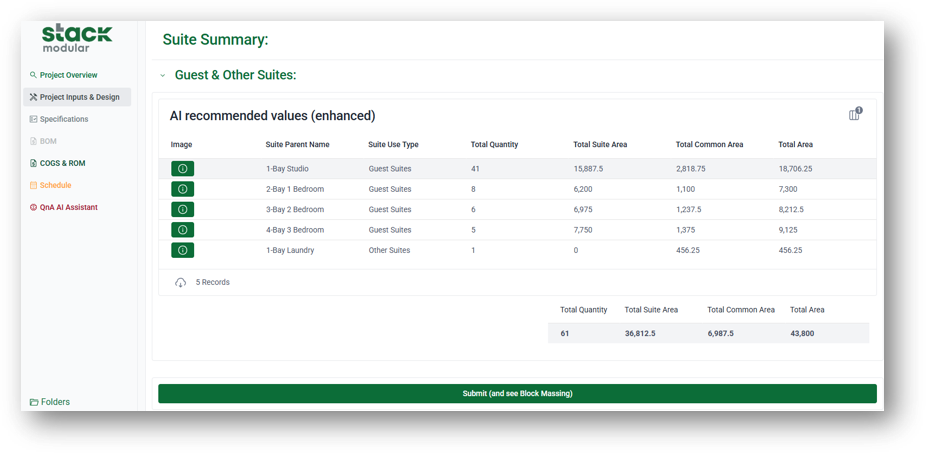
Custom interface for sales configurator
A multi-screen sales interface that provides project overviews, specifications, schedules, modular selections, and more.
AI generated block massings with Blender, AutoCAD, and Revit
Utilizing machine learning and large language models in the Configurator to generate architectural block massings. These essential artifacts help communicate the size and shape of buildings in their context without focusing on the details and specs required for building designs.
Automated sales proposal generator
This dynamically creates specific project proposals including the design brief, product specifications, project schedule, pricing, and more — all in an automatically created and editable Google Doc.

Results and Impact
A 6 month process reduced to 10 minutes
AI-driven automation removes six-months of manual labor from Stack Modular’s initial sales process.
Increased project capacity and profit potential
By increasing the speed-to-market, Stack Modular can complete more projects at once and drive greater revenue.
From manual process to operational AI in 5 months
Fastloop set up everything from data lakes to AI systems to get the Stack Modular sales team using the Configurator in only five months.

Why Fastloop.ai?
Quick understanding of client business
Between existing domain knowledge and similar experience in the industry, Fastloop is able to speak the same language as their client. This means quick identification of challenges they are facing and the opportunities to drive scale and increased profit.
Application of business knowledge to technical solutions
While other businesses with technical expertise tend to go after the niche, technical problems, Fastloop ensures that innovation in AI is always applied practically in a way that makes real sense for their clients.
Quick solutions and long-term success
Fastloop excels at making sure that every step along the way creates value for their clients. By working quickly and iteratively, they ensure that clients get the quick wins while still working towards a long-term version.
Future Outlook
Fastloop has set out a roadmap for Stack Modular to keep building functionality based on the data and AI foundations that have now been developed. Future features and opportunities include near-future items like summarization of drawing and non-drawing files, comparison of Stack Modular specs to client specs, and policy and procedure recommendations all the way to future work like fully AI-generated design schematics.